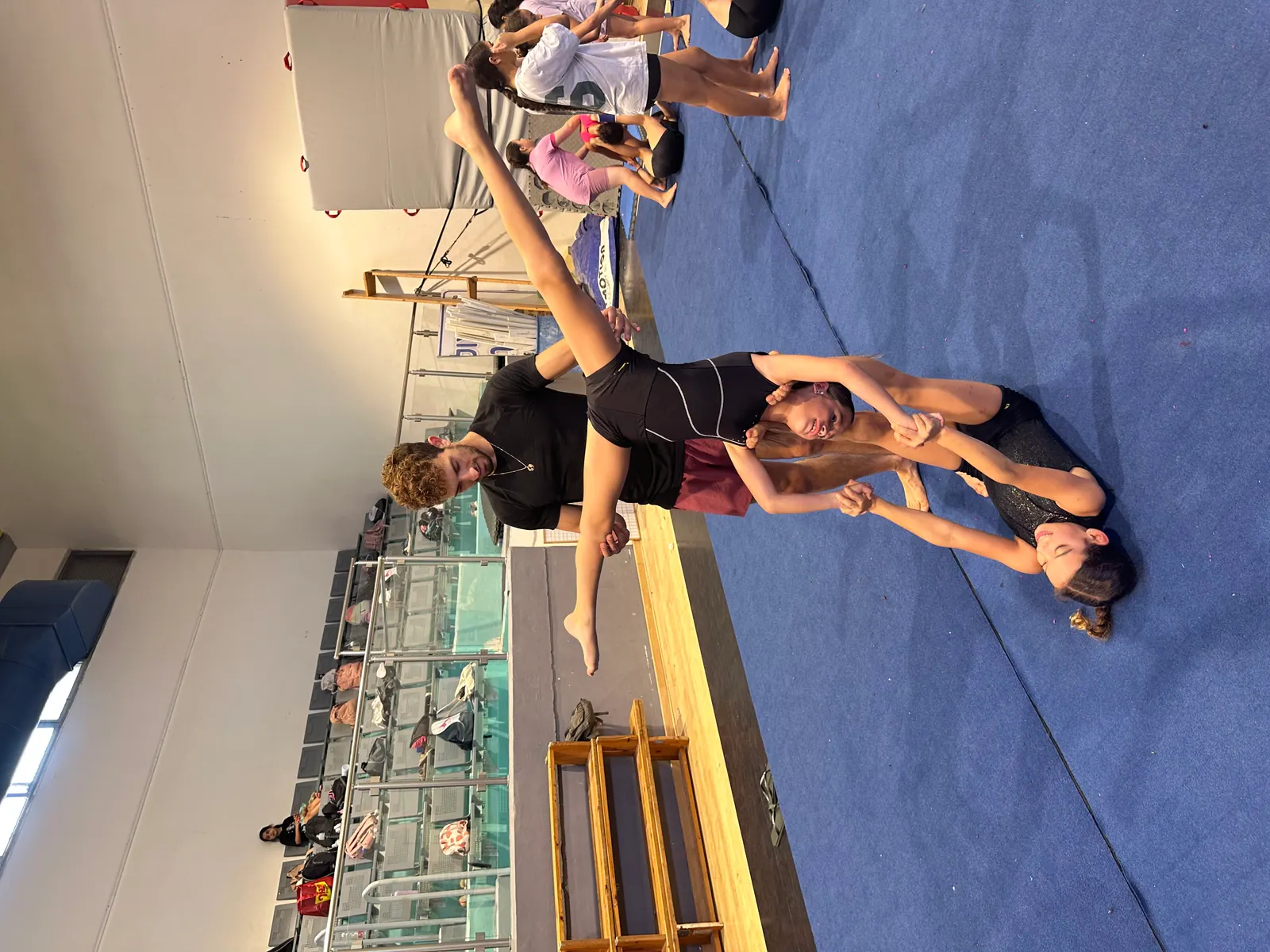
AcroDance (also written Acro Dance or Acrodance) is a blend of movement and dance with partner lifts and acrobatics. Instead of performing an acrobatic pose as a separate element, the entrance, the lift and the exit become part of the flow and the music. One partner lifts, balances and pops the other up, and the other flies, spins and lands back into the movement. It's what you see in impressive wedding dances and stage shows, and it's built from graded technique that you can learn with no dance background at all.
Want to learn AcroDance, not just read about it?
AcroDance classes in Tel Aviv →AcroDance in brief
AcroDance was born where the dance world meets the world of acrobatics. Unlike solo dance, everything here is done in pairs: a base (the one who lifts) and a flyer (the one who flies) learn lift, balance and pop technique together, then link it into a choreographed sequence set to music.
A typical class looks like this: a warm-up to prepare the body, technical work on one or two lifts, step by step and with spotting, and then linking them into movement: a clean entrance, the peak moment in the air, and an exit that carries straight on into the dance. By the end of class you have a real partner "movement phrase" that you can perform.
What's the difference between AcroDance and AcroYoga?
The two share the same foundation (partner work, trust and lift technique), but the emphasis is completely different:
- AcroYoga focuses on flow, breath and trust: poses and sequences that are usually practiced close to the floor, at a calm, meditative pace. Want to go deeper? Read What Is AcroYoga.
- AcroDance focuses on choreography and performance: dynamic standing lifts, musical transitions, and a result meant to be seen on a dance floor, on a stage or in front of a camera.
If AcroYoga is the practice, AcroDance is the performance. And many practitioners move between the two, because the technique of one strengthens the other.
Which lifts do you learn?
The technique is built gradually, from basic lifts to dynamic moments:
- Waist lifts: the classic foundation of partner dance. The flyer is in the air at chest-to-waist height, with a stable hold and a clean pose.
- Shoulder lifts: sitting or standing on the base's shoulders. High, stable, and they photograph beautifully.
- Pops: the base uses timing and a push to send the flyer into a moment of floating, a spin or a change of grip.
- Partner choreography: the part that ties it all together, with entrances and exits from the lifts inside one sequence of movement, set to the music.
Every lift is learned in stages, with spotting, until it's stable, and only then do we add height and dynamics.
Who is it for?
- Dancers who want to add an acrobatic dimension to their toolbox.
- Couples, especially ahead of a wedding: one well-placed lift in the first dance leaves the whole hall speechless. Couples AcroYoga is a great starting point.
- Performers and stage people: actors, movement artists and creators looking for new partner material for a show.
- AcroYoga practitioners who want a stage: taking the technique they already have and turning it into a performance.
Do you need a dance or acrobatics background?
No. This is the most common question ("AcroDance, what is it if I'm not a dancer?") and the answer is clear: you start from zero. The technique is built in a graded, safe way: holds and balances first, then low lifts with spotting, and only once you feel confident do you move up to height and fast movement.
The principle is similar to AcroYoga: you work with your skeleton, angles and leverage, not brute force. So even someone who doesn't lift weights can learn to lift another person, and someone who has never danced can look good in simple partner choreography after just a few sessions.
AcroDance in Tel Aviv: how do you start?
At AcroNationTLV, Shai Piro specializes in AcroDance, acrobatics and lifts, and has worked with contestants from Rokdim Im Kochavim (Israel's Dancing with the Stars). Classes in Tel Aviv are built around your goal: an impressive lift for a wedding dance, partner choreography for a show, or simply a new way to move together.
The easiest way to start is a private or couples lesson matched exactly to your level. Most couples do their first lift in the very first session. All the details, tracks and prices are on the AcroDance classes in Tel Aviv page, and you'll find more guides to the acro world on our blog.
Preparing for your wedding dance and want to add a lift? We have a dedicated track for exactly that: Wedding Dance Lifts.
Frequently asked questions
What's the difference between AcroDance and AcroYoga?
The technical foundation is similar (partner work, trust and lifts), but the emphasis is different. AcroYoga focuses on flow, breath and poses at a calm pace, usually close to the floor. AcroDance focuses on choreography and performance: dynamic standing lifts, transitions set to music, and a result meant to be seen on a stage or a dance floor.
Do I need a dance or acrobatics background to start AcroDance?
No. You start from zero: the technique is built gradually, with holds and balances first, then low lifts with spotting, and only once you feel confident do you move up to height and dynamics. You work with your skeleton and leverage rather than brute force, so even someone who doesn't strength-train can lift a partner.
Where can I learn AcroDance in Tel Aviv?
At AcroNationTLV in Tel Aviv. Shai Piro specializes in AcroDance, acrobatics and lifts, and has worked with contestants from Rokdim Im Kochavim (Israel's Dancing with the Stars). You can start with a private or couples lesson matched to your level. All the details are on the AcroDance page, and quick scheduling on WhatsApp.